
2nd Period of Biblical History
Moses Period
1350 BCE – 1000 BCE
Sponsored By: The Luke Family
Casselberry, FL, USA
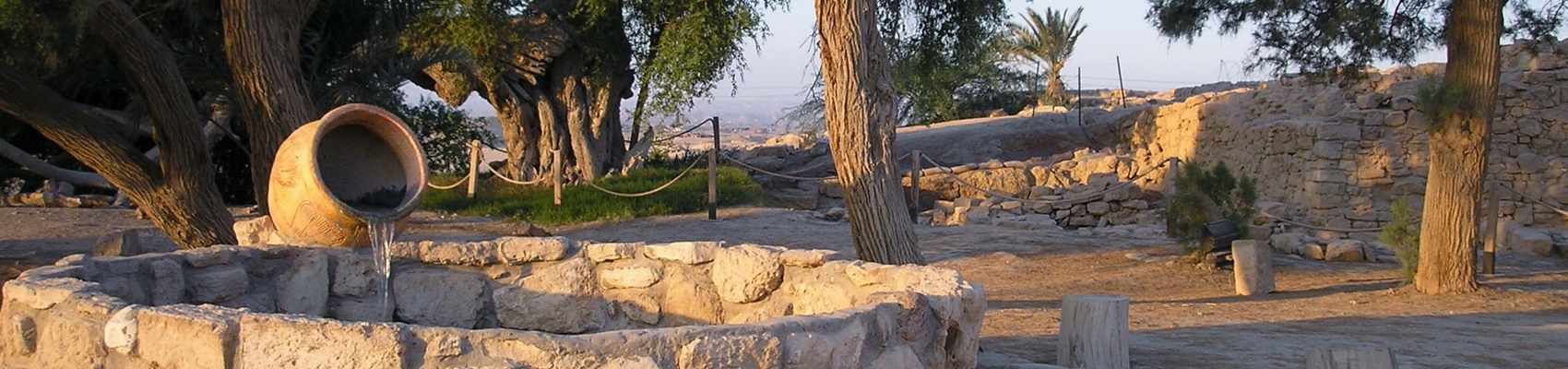
Four books of the Bible are dedicated to the story of the Jewish exodus from Egypt, their journey through the Sinai wilderness, followed by their entrance into the Promised Land. According to the Book of Numbers, they camped on the outskirts of “Oboth,” which means Tamar or “Palm Tree” in English, before entering Canaan. The springs at Hatzeva provided the abundant waters for the palm trees to grow and this oasis was one of the many stops for the spice caravans, in later years, where they could replenish their water supply.
The Torah has it that Moses received “words from heaven,” saying, “I will give you the Land as a heritage” (Ex. 6:8). This proclamation and similar commandments became priestly teachings for the new inhabitants, instructions informing them how to build God’s Tabernacle and how to live.
Moses was always in the front, leading his people and setting up the newly created Tabernacle at every stop. Finally, the weary wanderers entered the country of Edom, travelled east of the Dead Sea and camped near to present day Amman. There Moses died and Joshua took the leadership of the Israelites before they crossed the Jordan River and entered their Promised Land.
 This is a display of the Tabernacle of Moses. Tabernacle means “tent,” “place of dwelling” or “sanctuary.” It was a sacred place where God chose to meet His people, the Israelites, during the 40 years they wandered in the desert under Moses’ leadership. It was the place where the leaders and people came together to worship and offer sacrifices.
Seven Historical Periods of Israel

Abrahamic Period
learn more

Moses Period
learn more

Israelite Period
learn more

Greco-Roman Period
learn more

Medieval Period
learn more

British Period
learn more

Israeli Period
learn more